Why Frets?
Marco Ciciliani is a composer, media artist, and performer, and a professor of computer music composition at the University of Music and Performing Arts Graz, Austria. His work focuses on experimental electronic music and interdisciplinary performances combining sound, video, lighting, lasers, and interactive technologies.
Why Frets? is an interdisciplinary project based on a fictional history of the electric guitar, tracing its origins in the nineteenth century through to its imagined disappearance in the future. At the Musrara Mix Festival, he will present an audiovisual performance and a performative lecture, exploring from different perspectives the connections between music, technology, gender, and social values. By reinventing the past, the project challenges the way we understand the history of musical instruments and their place in culture.
Events within Why Frets?
Austrian artist and musician Marco Ciciliani presents two parts of his multilayered project Why Frets? at Musrara Mix, tracing the rise and fall of the electric guitar. In this part, he presents a performative lecture set in the year 2083.
In 1833, Sieglinde Stern, a professional weaver and amateur engineer, invented the first electromagnetic pickup. A hundred years later, in 1933, her invention made the first electric guitar possible, and it became one of the most popular and widespread musical instruments in Western music history.
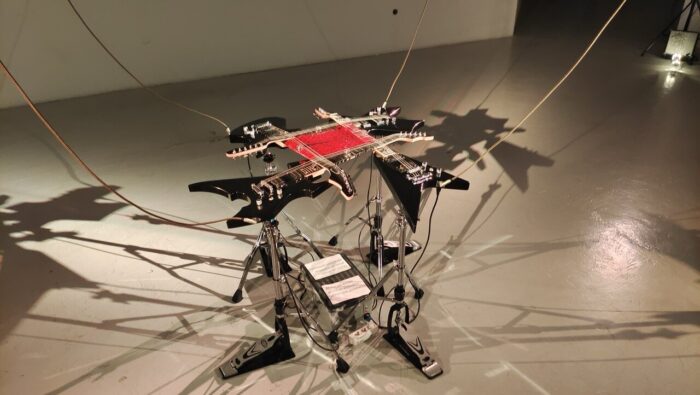
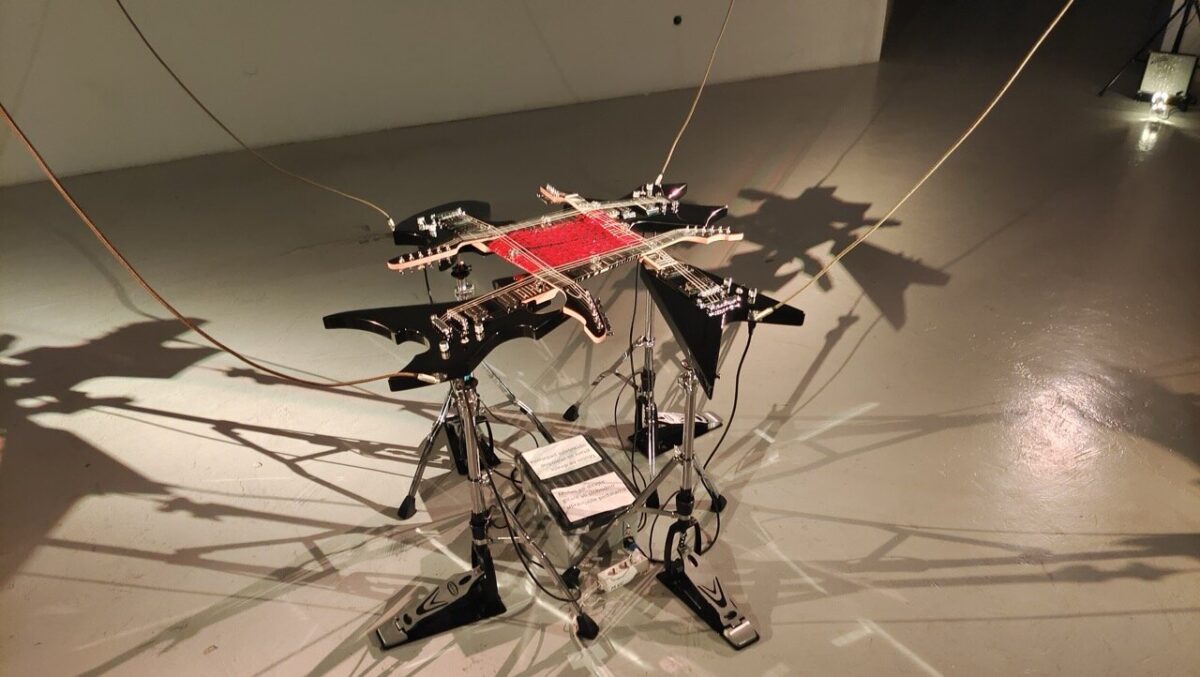
Today, however, 150 years later, the electric guitar’s central position in popular music is rapidly declining. What led to the electric guitar’s rise and fall? How did an instrument rooted in the craft of weaving undergo a series of technological transformations, only to return, in its contemporary evolutionary form, to becoming a weaving loom?
And who was its inventor, Sieglinde Stern, erased from the pages of history and resurrected as David Bowie’s Ziggy Stardust?
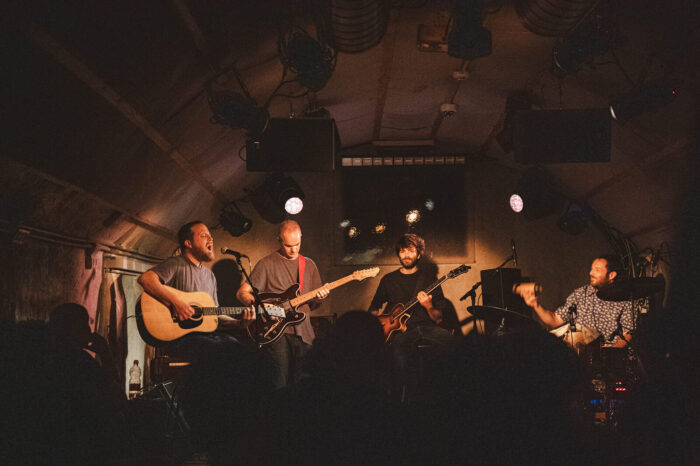
Three works that place the electric guitar center stage. Eyal Nachtomy deconstructs the guitar using algorithms and computers; Three Guitars create towering soundscapes; and Marco Ciciliani presents a tribute to, and deconstruction of, the 1980s Downtown New York guitar scene in an audiovisual performance combining live electronics, fictional archival footage from the future, and interviews from the period.
hypervigilance / Eyal Nachtomy
A solo performance featuring guitar, computer, moving speakers, and live algorithms.
Eyal Nachtomy is an outstanding graduate of Musrara’s New Music Department (2025) and the Artistic Research Program (2026).
He co-founded the Jerusalem-based label EmmOhm and is a member of the ensembles 9Hole and Elektroslil. His latest solo album, Blinds, was released on Shukri. He curates and produces the experimental performance series Studio Time. His works and collaborations have been presented and performed at various institutions, including the Arena Theater, Hamifal Gallery, the Museum of Italian Jewish Art, Jerusalem Design Week, and the Center for Digital Art in Holon.
Downtown 1983 / Marco Ciciliani
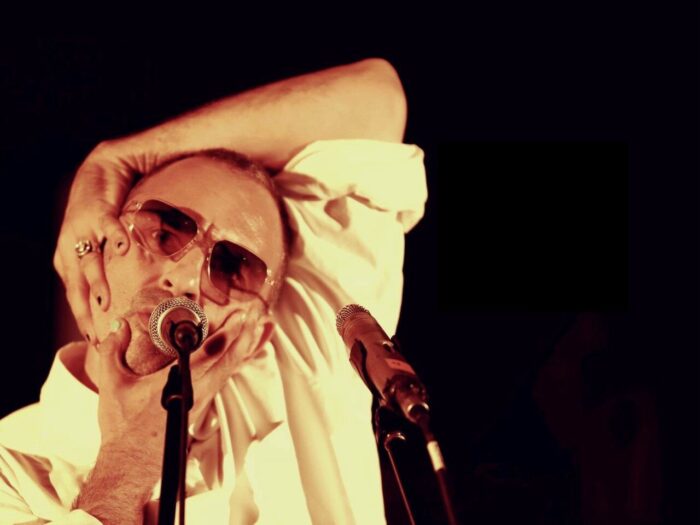
Austrian artist and musician Marco Ciciliani presents two parts of his expansive project Why Frets? at the festival, tracing the rise and fall of the electric guitar. Downtown 1983 is an audiovisual performance featuring live electronics and three recorded guitarists (Nick Cook, Nela de Gossam, and Alex Tenor).
A live performance accompanied by a fictional documentary film from 2038, retracing a 1983 performance at the Roulette club in Downtown Manhattan. A look back from the future at New York’s 1980s music scene and the electric guitar that took center stage.
Marco Ciciliani is a composer, intermedia artist, performer, and researcher. His artistic practice focuses on composing performative electronic music in audiovisual contexts. Ciciliani explores speculative fabulation and storytelling that invite audiences to adopt an active perspective. Interactive video, lighting design, and laser graphics play an important role in his works.
Ciciliani is Professor of Computer Music Composition at the Institute of Electronic Music and Acoustics (IEM) at the University of Music and Performing Arts Graz, Austria. Between 2016 and 2021, he initiated and led the GAPPP research project, investigating the artistic potential of elements from computer games.
Three Guitars
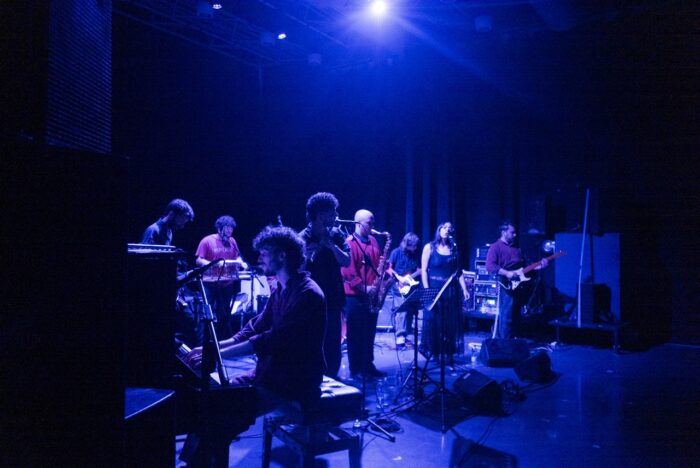
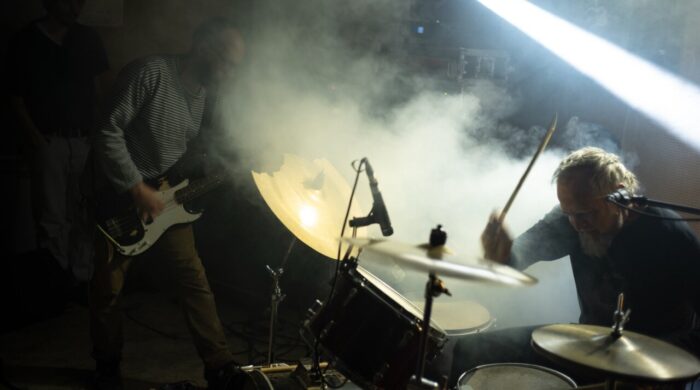
A trio of electric guitars explores the world of sound. Or Rimer, Sharon Kantor, and a guest guitarist search for melodies emerging within the frequencies generated by playing at a particular volume, through unconventional tunings, resonance within the space, and methods of imitation and duplication. A live composition rooted, on the one hand, in the traditions of noise music and rock, and, on the other, in totalism and post-tonal thinking. The result is a soundtrack of enigmatic soundscapes in a world in flux, sounds seeking to come together.
The ensemble Three Guitars features Sharon Kantor and Or Rimer on guitar. The two are joined by a surprise guest guitarist.